UNs

You can't UNfeel a feeling.
You can't UNdo a deed.
You can't UNsay a word.
You can't UNgrow a seed.

You can't UNtaste a flavor.
You can't UNsee a scene.
You can't UNhear a sound,
Or UN-eat gassy beans.

You can't UNbreak an egg
That splattered on the floor,
Or call back opportunities
That wandered out the door.

You can't turn back the clock,
And that can make things tough,
But you CAN do better next time,
And THAT is good enough.

No, you can't UNdo the past
Or UNspill any spills,
So let go of the UNs, my friend
And focus on "I wills".

-B.C. Byron
Unspilling milk, unbreaking eggs, and turning back time just aren’t worth your time

This simple poem is one of my personal favorites. I read it when I need a boost after I’ve made a blockhead mistake, which happens frequently.

Like all emotions, guilt and regret have an important purpose. Our desire to undo the past is NOT part of that purpose. Imagine if you were given the ability to time travel and retry any time you want. You could go back and wipe that embarrassing bogie from your nose before going to the dance. Maybe you would take back a few words that shouldn’t have been said, or add a few words that would really zing that jerk who made fun of you at school. Personally, I would go back and tell myself to wear my wrestling head gear so I wouldn’t have weird cauliflower shaped lumps in my right ear. But how far would we really get with that power? I think it’s a near certainty that we would all end up in a constant redo loop, trying to get those moments perfect. We would end up with even more regret as we iterated over and over for eternity. UNs aren’t worth your time.

Regret can overwhelm and immobilize us if we don’t understand it’s real purpose. Guilt should be a motivator. Dwelling on the past is only useful if it helps us make plans for the future. I’ve known so many people who get caught up in a perpetual cycle of feeling unworthy and sad because of a few mistakes, and they seem to feel like being depressed is the best way to make up for those mistakes. Feeling down about a bad move is natural, but feeling cruddy doesn’t fix it. There simply is no undo button on our bodies or brains (unless that’s what bellybuttons do. Hmmm….). There IS always a next time, though. You are worth extra chances, lots of them. Just be a little better at something as often as you can, say sorry for real, and ask for help when you need it. That’s enough. That is enough. No depression or crippling regret necessary, friends.
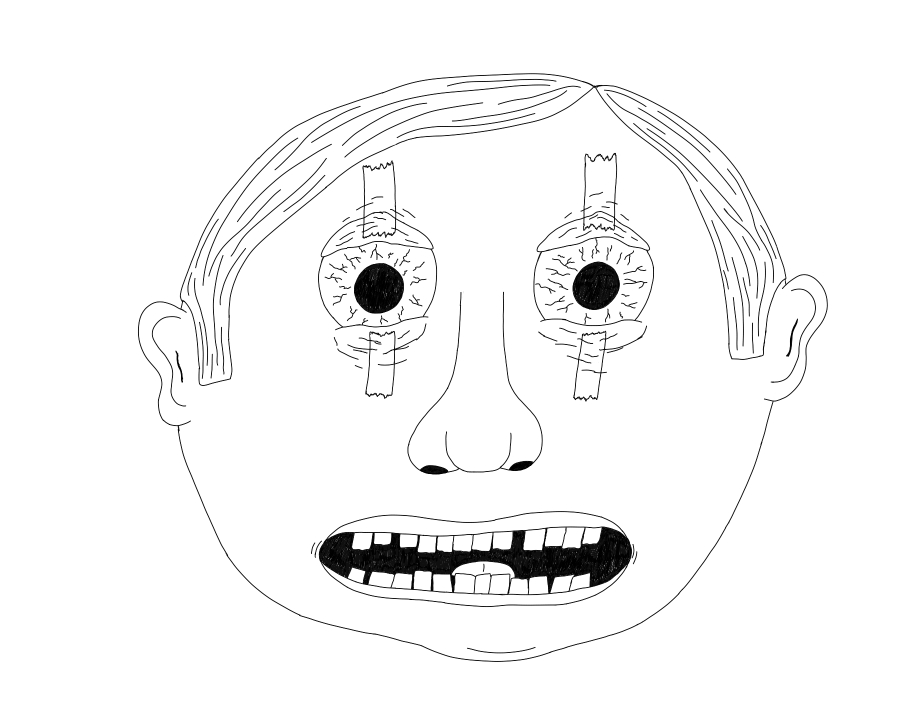
Toast Watcher

Waiting, waiting, waiting
For the toaster, toaster, toaster.
Maybe it will speed up
If I watch a little closer.
Boring, boring, boring
But I gotta be the first
To see the toast jump upward
In a millisecond burst.
My eyes are burny itchy
Since I taped 'em at the top,
But I know that I could miss it
If I let my eyelids drop.
It's funny,
Toast is slower
When I try to see it pop.


-B.C. Byron
Can’t… blink…. must see the toast pop before my eyes dry out

I’m an electrical engineer. This poem reminds me of a favorite phrase among engineers, “trust but verify”. What this really translates to is “I don’t believe you until I’ve seen it or done it myself”. Engineers won’t accept that a bridge is earthquake proof simply because you say it is and you’re an expert in the field. They won’t believe it 100% if a computer simulation program shows that the bridge won’t fall down, or even if you built an exact replica of the bridge, film it in an actual earthquake and show it to them. Engineers want to see the numbers on paper (or a screen) and then watch the actual thing for themselves. We can’t always verify things so directly, but just be aware that we’ll never claim certainty until we ourselves have done the experiment and seen it happen exactly as the math predicted. Otherwise, it’s all just good theory and we’ll only say, “that bridge is unlikely to fall down given the design parameters, but it hasn’t been verified”. Our lot are rather hard to please when it comes to facts.

So what does “trust but verify” have to do with watching a toaster? We all think we know what it looks like when the toast pops up, or what happens at the exact instant when a clock transtions from 11:59 p.m. to 12 a.m., or what happens as a pot of water finally begins to boil. But do we really know? This is what drives the kid in this poem to tape his eyes open and watch the toaster. Until you see it directly, you can’t be sure that the toast doesn’t crawl out of the toaster with the arms and legs it sprouted in there and suddently poofss from soft white to crunchy-brown. It’s extremely unlikely given what we know about how other, similar things work, but this is all just speculation that needs verification. Is it possible that the clock transitions from 11:59 to 11:60 for a few milliseconds before going to 12:00? Yes. Yes it is possible. Wouldn’t that be just the kind of nutty joke a clock engineer would play on everyone to see if they’re really paying attention? Observation is king. Observation paired with a deep understanding of how a thing does just what you saw it do; that’s the super-duper, awesome science, now-I-know, verified king. Trust but verify.